
Mechanical simulations play a critical role in the development of electrical machines by allowing our engineers to predict component- and assembly-level behaviour under real operating conditions before a physical prototype is built. Through these simulations, we can identify potential failure points and optimise structural integrity.
- Static linear and nonlinear analyses
- Dynamic simulations
- Modal analyses
- Frequency response analyses
- Shock response spectrum analyses
- Random vibrations analyses with PSD spectra
- Harmonic vibrations analysis
- Order analyses for the rotor
- Noise, vibration and harshness
- Structural instability: linear and nonlinear buckling
- Bearing assessment
- Adhesives simulation
- Fatigue assessment
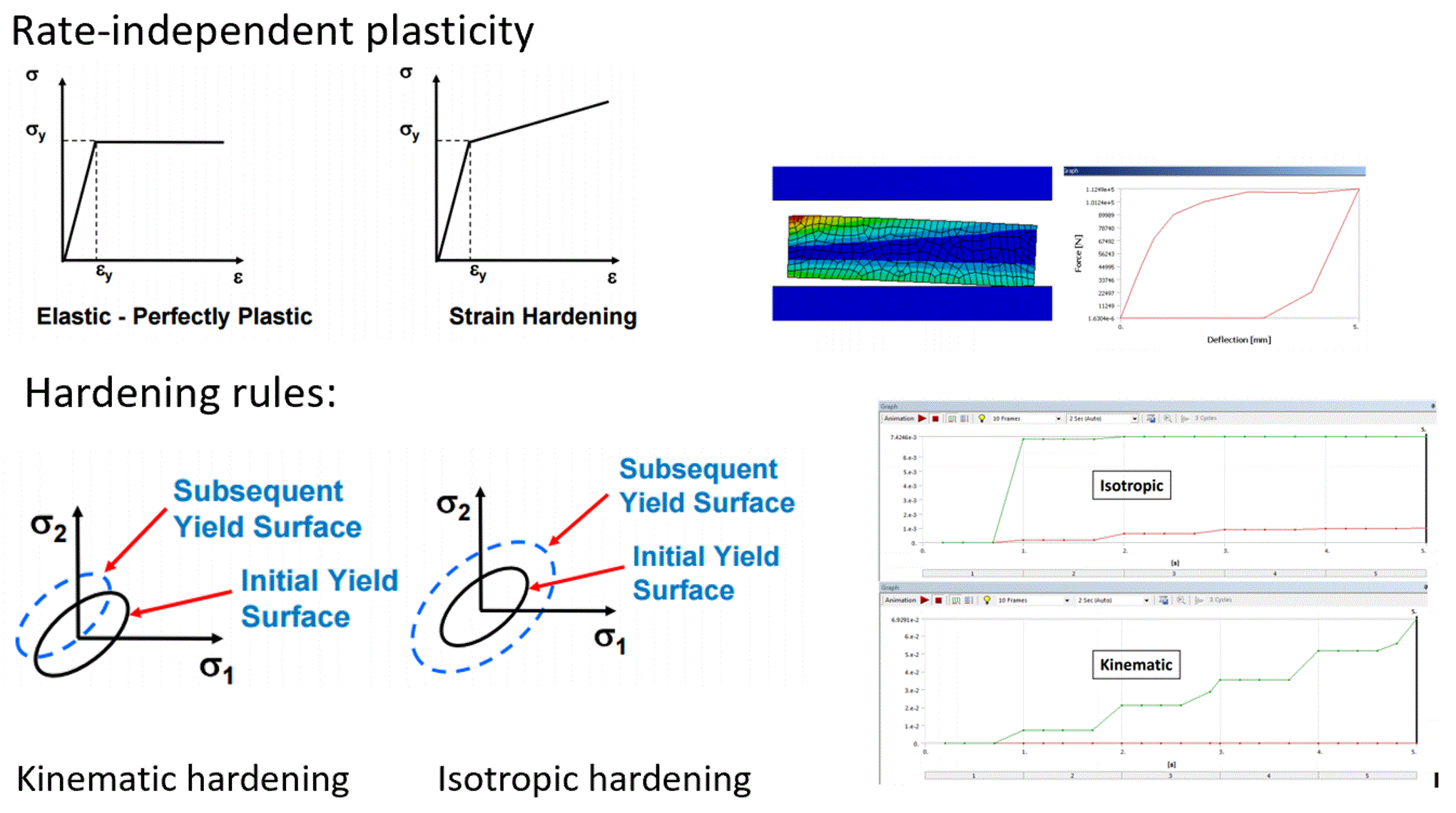
1. Static linear and nonlinear analyses
With various loads (accelerations, rotational speeds, pressures, temperature maps, bolts pretensions, forces, moments). Advanced material plasticity modelling.

2. Dynamic simulations
These simulations go beyond traditional static and quasi-static analyses, by considering the dynamic behaviour of the electric motors under various operating conditions, such as vibrations and shocks.
2.1 Modal analyses
With the goal of assessing the modal parameters 🡪 resonant frequencies and natural vibration modes. This data can be used in two different ways:
– To see whether the motor has any resonant frequencies in the operating range (0 RPM 🡪 max speed), with at least a 20% safety factor. If this happens, the design must be improved to avoid any resonance at low frequency, in the operating range, by stiffening the structure or changing the mass distribution.
– To serve as input data for future MSUP analyses (shock response, random vibration, harmonic vibrations). In this way, the frequency information will be imported in these future simulations.


2.2 Frequency response analyses
They will have two objectives:
– The first one is to assess the mechanical stresses induced in the electrical machine parts, and anticipate, even from the design stage, any negative impact that might jeopardize their mechanical integrity.
– The second objective is to use the frequency response information such as accelerations and displacements and assess, for example, whether the maximum target levels set by the inverter electronics manufacturers are respected, and otherwise propose improvement ideas in an iterative approach, with the goal of validating the durability of these sensitive components.
2.2.1 Shock response spectrum analyses
To assess the structural integrity of the assembly in the case of a shock occurrence. This could be done with any shock profile required by different standards (half-sine, saw tooth, etc.) and the required damping coefficients.


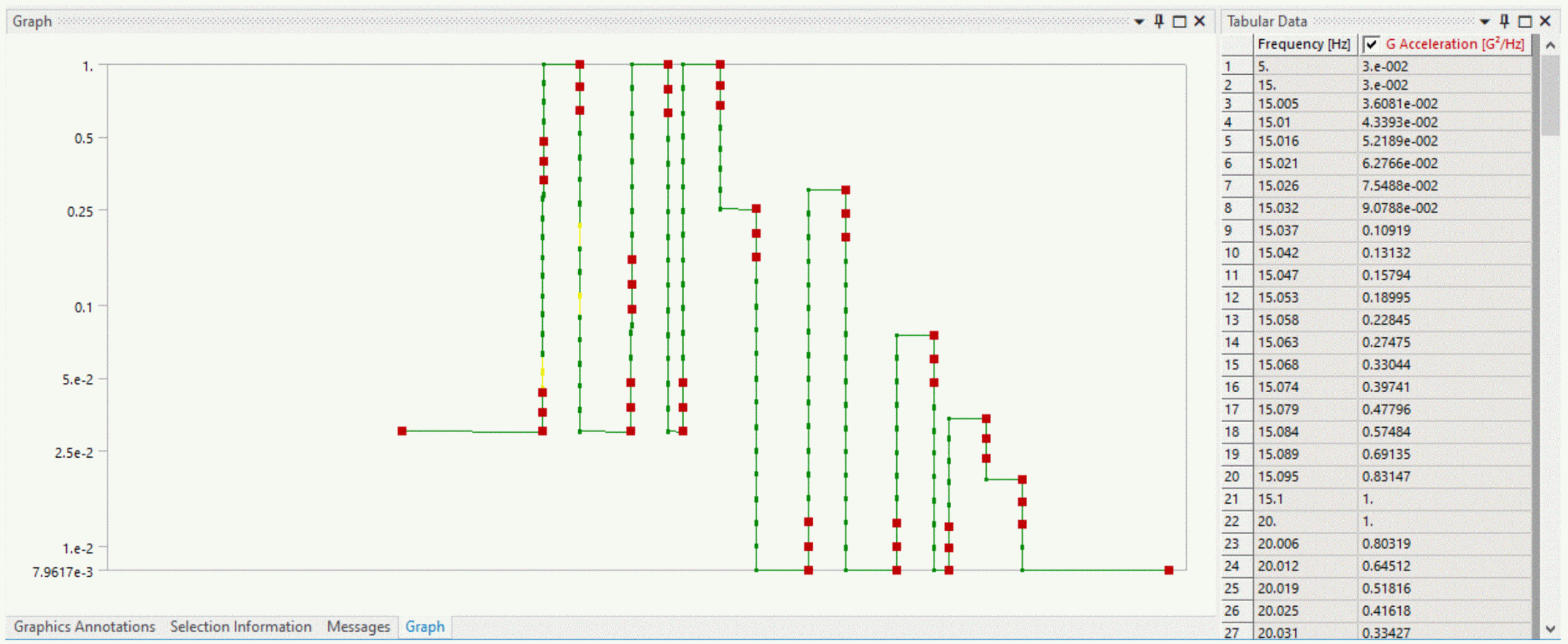
2.2.2 Random vibrations analyses with PSD spectra
To assess the structural integrity of the assembly in the case of random vibrations, which is a very common phenomena in automotive 🡪 vibrations coming from the road. This can be done with any shock profile required by different automotive standards and defined in the specifications.

2.2.3 Harmonic vibrations analysis
To assess the structural integrity of the assembly in the case of harmonic vibrations coming from the thermal combustion engine (for HEV applications), or generated by the unbalance of the rotor, in its operating range.


2.3 Order analyses for the rotor
Because rotor resonant frequencies evolve with rotational speed, due to stiffness evolution of the rotor, it is necessary to conduct order analysis through Campbell diagrams and assess whether we find critical speeds in the operating range.

2.4 Noise, vibration and harshness
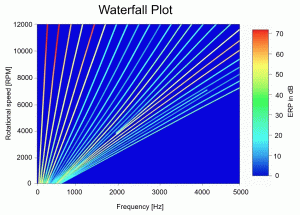
From a complex Multiphysics workflow, starting with electromagnetic forces (from EM analysis) and with harmonic simulations where these forces serve as input data, we search to assess the equivalent radiated sound power (ERP) or Waterfall diagrams generated by the motor from an acoustic simulation.
2.5 Structural instability: linear and nonlinear buckling

3. Bearing assessments
Using numerical simulation (for rolling bearings, using Rolling Bearing inside ANSYS software): power loss, bearing preloading, lubricant film thickness, bearing acoustics.


4. Adhesives simulation
Peel off of the magnets due to axial forces and centrifugal loads, a particular case for axial flux machines.

5. Fatigue assessment (including the FKM method)

6. Many more under research and methodology development!